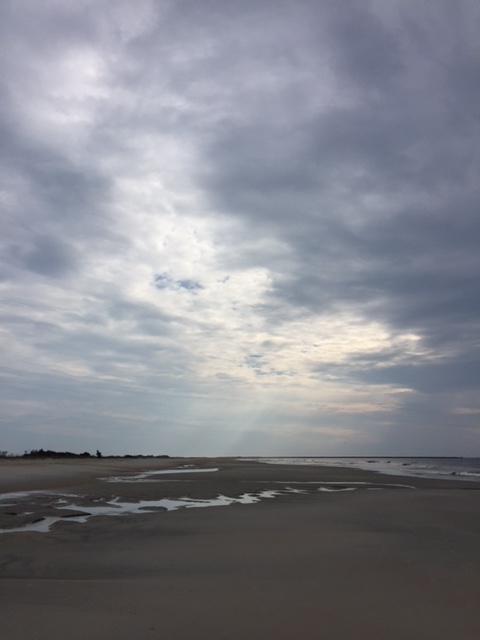
“Ever since the creation of the world, God’s eternal power and divinity—however invisible—have become visible for the mind to see in “all things that God has made.” (Romans 1:20). This is surely true; but you have to sit still in it for a while, observe it, and love it without trying to rearrange it by thinking you can fully understand it. This combination of observation along with love—without resistance, judgment, analysis, or labeling—is probably the best description of contemplation I can give. You simply participate in a “long, loving look at the Real.”
Francis [of Assisi] would “rejoice in all the works of the Lord and saw behind them things pleasant to behold—their life giving reason and cause. In beautiful things he saw Beauty itself, and all things were to him good.” This mirroring rows naturally back and forth from the natural world to the soul. All things find themselves in and through one another. Once that flow begins, it never stops. You’re home, you’re healed, you’re saved—already in this world.
Richard Rohr – Center for Action and Contemplation – daily meditation, June 2, 2017
Opening reflection chosen and read by Amy W.
_____________________________________________________________
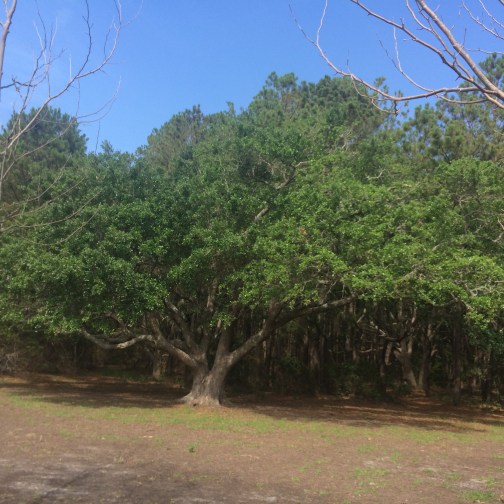
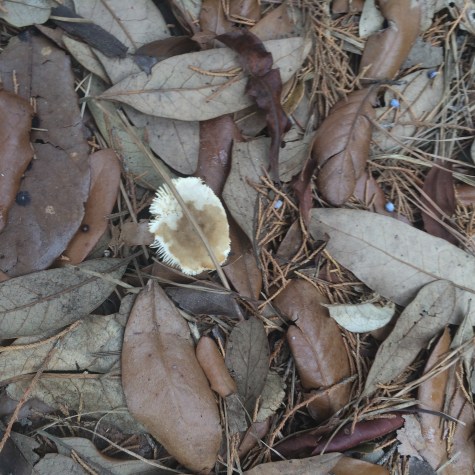
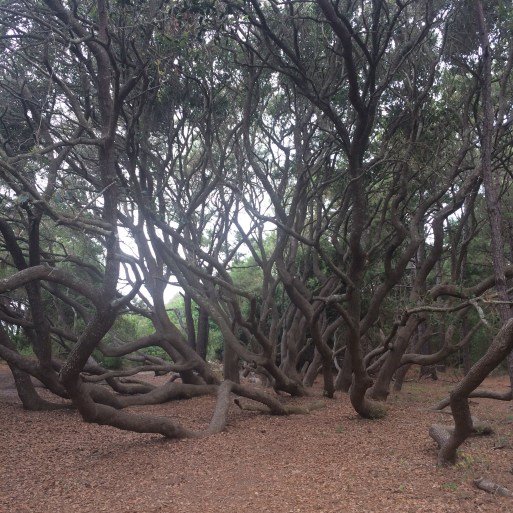
My first intention was to walk the beach even when I took my first photo before we began our walk. My thoughts were about companionship. But I changed my mind and walked the sandpiper trail. As I walked my thoughts changed and I could only think about the majesty of God and how we, his children, and each of us with God are always together.
Photos and reflection by Evie M.
______________________________________________________________
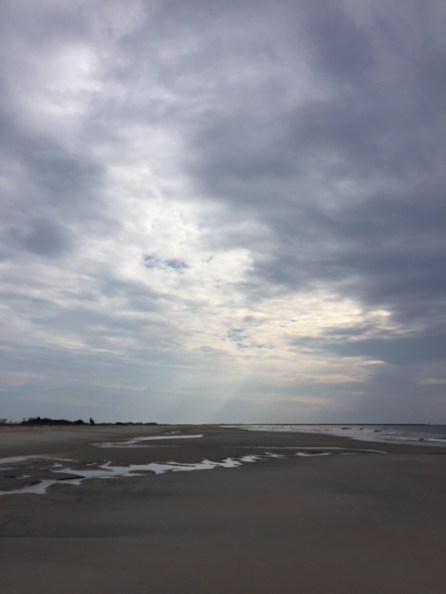
Photo by Nancy B.
______________________________________________________________

As I began walking, I was struck by the nuanced beauty of the day– so many shades of blue and gray and tan — all adding up to an amazing pallete of wonder! I felt a deep peace on this calm, overcast morning. But I also thought of the bands of storms coming through today– stormy… calm… stormy… calm… I realized (again!) it all belongs. I felt a shift in my perspective about the struggles of a loved one — a shift to view the pain and illness and aging through the underlying lens of vulnerability — the vulnerability of my loved one, myself, and all beings. In writing this blog entry I reread a powerful description of vulnerability by David Whyte, presented in part here:
VULNERABILITY is not a weakness, a passing indisposition, or something we can arrange to do without, vulnerability is not a choice , vulnerability is the underlying, ever present and abiding under-current of our natural state. To run from vulnerability is to run from the essence of our nature, the attempt to be invulnerable is the vain attempt to be something we are not and most especially, to close off our understanding of the grief of others. More seriously, refusing our vulnerability we refuse the help needed at every turn of our existence and immobilize the essential, tidal and conversational foundations of our identity.
… The only choice we have as we mature is how we inhabit our vulnerability, how we become larger and more courageous and more compassionate through our intimacy with disappearance, our choice is to inhabit vulnerability as generous citizens of loss, robustly and fully, or conversely, as misers and complainers, reluctant, and fearful, always at the gates of existence, but never bravely and completely attempting to enter, never wanting to risk ourselves, never walking fully through the door.
May 2014 David Whyte
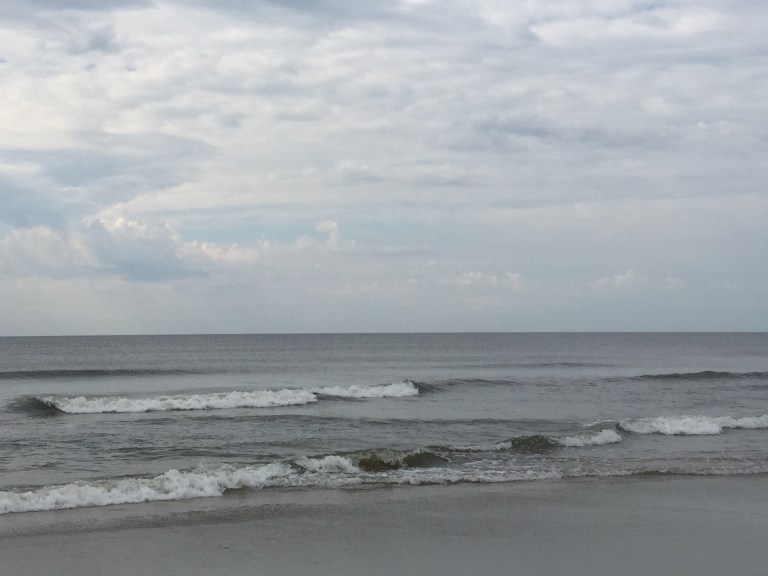
I also saw the gentle waves from a new perspective today — waves merging as they approached the shore and lapping playfully together. During our group reflection period, a fellow walker suggested that I might consider viewing the vulnerability and playfulness together in some way — a combination and transformation that I am thinking about…
Waves playfully merge
Risk vulnerability
Undertows push pull.
Photos, reflection and haiku by Nancy L.
 walkinginwonderhcfm